
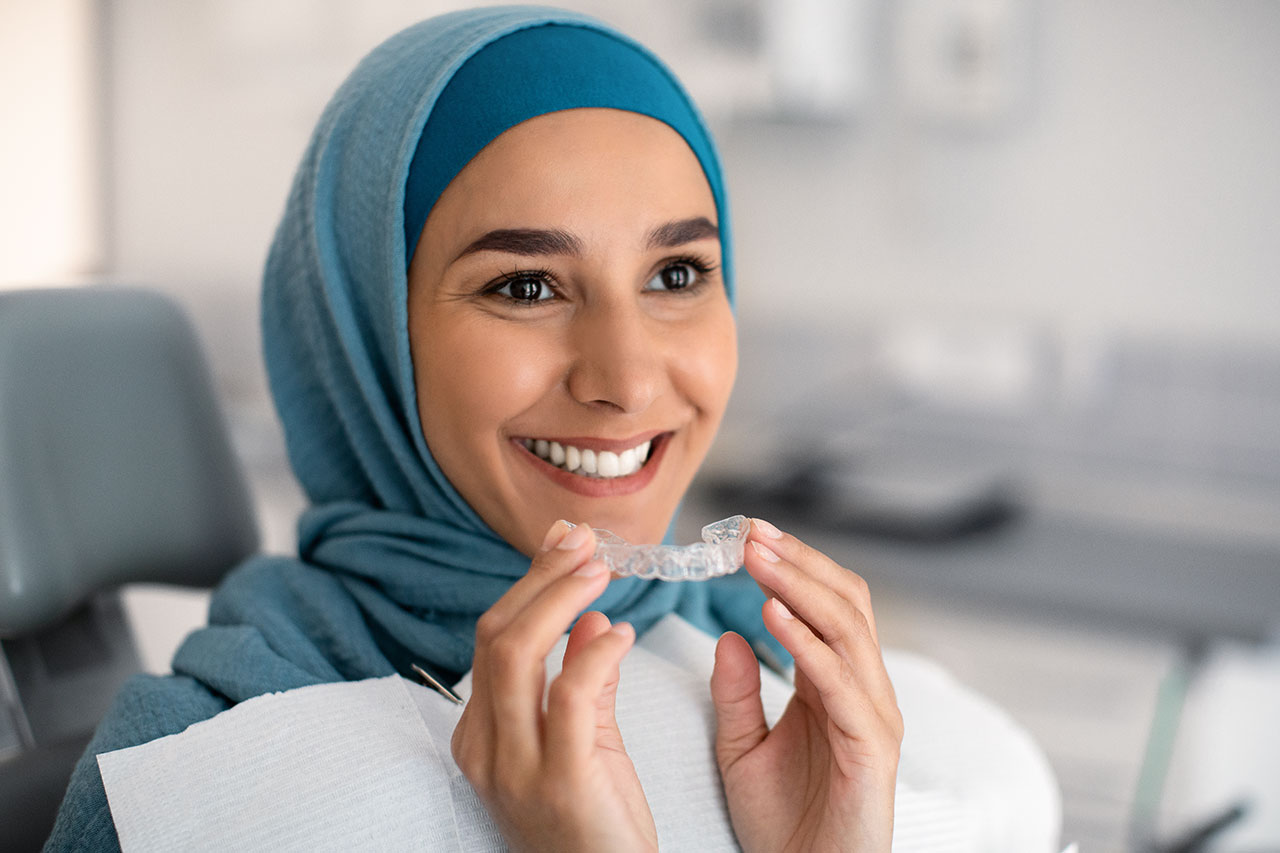
Invisalign Attachments Explained: What They Are and Why They Matter in Pflugerville
You may expect Invisalign treatment to involve only a series of clear removable trays. Then, during treatment planning, your dentist mentions small tooth-colored attachments. What are they, and why are they needed? For many patients receiving Invisalign in Pflugerville, attachments help the aligners apply more precise forces so specific teeth can move in the planned direction.
Invisalign attachments are small shapes made from tooth-colored dental composite and bonded temporarily to selected teeth. They act like tiny handles that give the clear aligners additional grip. Not everyone needs the same number, shape, or placement of attachments because every orthodontic plan is different. Therefore, seeing attachments on someone else's teeth does not predict what your own treatment will require.
What Are Invisalign Attachments?
Invisalign attachments are small areas of composite resin placed on the surface of certain teeth during clear aligner treatment. The material is similar to tooth-colored resin used for other dental procedures, although attachments are shaped specifically to work with the aligners.
The aligner fits over both the teeth and the attachments. Small molded areas within the tray correspond to the attachment shapes. As the aligner applies pressure, the attachments can help direct the force more effectively.
Attachments are temporary. After orthodontic treatment is complete, the dentist removes the composite and polishes the tooth surface. The goal is to return the enamel to a smooth finish.
Why Does Invisalign Need Attachments?
Clear aligners move teeth by applying carefully planned pressure. Some movements are relatively straightforward, while others require more control. A smooth tooth does not always give the plastic aligner enough surface area to create the desired force.
An attachment changes the shape of the tooth temporarily. This can provide the aligner with additional leverage for movements such as rotation, root control, intrusion, extrusion, or other planned adjustments.
In simple terms, the attachment helps the tray hold onto the tooth in a more useful way. However, attachments do not move the teeth by themselves. The aligner, attachment design, wearing schedule, and overall treatment plan work together.
Does Everyone With Invisalign Need Attachments?
No. Some very limited alignment cases may require few attachments or none at all. However, attachments are common because many orthodontic corrections involve more than simply tipping teeth slightly.
The number of attachments can also change during treatment. For example, attachments may be placed at the beginning and remain throughout much of the aligner sequence. In other cases, some may be removed and new ones added during refinement.
Your dentist plans attachment placement based on the movements needed, not simply on appearance. Therefore, having several attachments does not necessarily mean your case is unusually difficult.
What Do Invisalign Attachments Look Like?
Attachments are made from material selected to blend with the teeth. They are usually small, but their visibility depends on tooth color, attachment size, location, lighting, and how closely someone is looking.
Some attachments are rectangular, while others have more angled or specialized shapes. Their design is based on the type of force needed. An attachment on a back tooth may look different from one on a front tooth.
Although Invisalign attachments make clear aligner treatment slightly more noticeable than perfectly smooth trays, many patients still find them substantially less conspicuous than traditional metal brackets and wires.
How Are Invisalign Attachments Put On?
Attachment placement is typically a straightforward dental appointment. First, the tooth surfaces are cleaned and prepared. A template, which resembles an aligner tray, helps position the composite in the correct locations.
Tooth-colored material is placed into the designated areas of the template. The template is seated over the teeth, and the composite is hardened using a curing light. Afterward, the template is removed and the dentist checks each attachment.
The aligners are then placed to confirm that they fit around the new attachment shapes. Because attachments create additional grip, inserting and removing the trays may feel different at first.
Do Invisalign Attachments Hurt?
Placing attachments generally does not require drilling into the teeth. Therefore, the bonding process itself is usually manageable. However, the first aligner used with attachments may feel tighter because the trays can engage the teeth more firmly.
Temporary pressure is common when beginning a new set of aligners. Teeth are being encouraged to move, so some tenderness can occur. This often becomes less noticeable after the first portion of the aligner-wearing period.
If one attachment has a sharp edge, an aligner does not seat correctly, or discomfort seems excessive, contact the dental office. Small adjustments may improve comfort.
How Do You Remove Invisalign Trays With Attachments?
Removing clear aligners can take more practice when attachments are present. Instead of pulling aggressively from the front teeth, it may be easier to loosen the tray near the back teeth first and work gradually around the arch.
Your dental team can demonstrate a technique based on the placement of your attachments. Aligner removal tools may also help some patients, especially if fingernails are short or the trays fit very snugly.
Avoid twisting or bending the aligners excessively. Repeatedly forcing a tray off from one location can damage the plastic or place unnecessary pressure on an attachment.
Benefits of Invisalign Attachments
Although many patients initially hope to avoid attachments, these small additions can make clear aligner treatment more capable and precise. Their benefits are connected to the way they help aligners control tooth movement.
- Improved aligner grip: Attachments give the trays additional surfaces to engage instead of relying only on smooth enamel.
- More controlled movement: Specialized shapes can help create forces needed for specific orthodontic corrections.
- Broader treatment possibilities: Attachments can help clear aligners address movements that may be difficult with smooth trays alone.
- Customized placement: Attachments are planned according to the individual movement required for each tooth.
- Tooth-colored appearance: Composite resin is selected to blend with natural teeth more discreetly than metal orthodontic hardware.
- Temporary design: Attachments can be removed when they are no longer needed.
- Support for treatment accuracy: When combined with consistent aligner wear, attachments can help the trays perform according to the treatment plan.
Can Invisalign Attachments Stain?
The composite material used for attachments can sometimes collect surface discoloration, especially around the edges. Coffee, tea, dark sauces, tobacco, and other strongly pigmented substances may contribute to staining.
However, keeping the teeth clean can help reduce buildup around the attachments. Brush after meals when practical, and clean between the teeth daily. If you cannot brush immediately, rinsing with water can help remove some food particles before reinserting the aligners.
Avoid whitening treatments without discussing them with your dentist. Attachments cover small portions of tooth surfaces, so whitening during treatment can potentially create uneven shade changes.
How Do You Brush and Floss With Invisalign Attachments?
One advantage of removable aligners is that the trays come out for oral hygiene. Brush the teeth normally, paying extra attention around attachment edges where plaque can collect.
Use gentle pressure instead of aggressive scrubbing. The attachments are bonded securely, but excessive force is unnecessary. Floss between the teeth once daily or use another interdental tool recommended by your dental team.
In addition, clean the aligners according to your instructions. Putting a clean tray over teeth covered in food particles can trap debris against the enamel for hours.
What Foods Should You Avoid With Invisalign Attachments?
Unlike traditional braces, Invisalign trays are removed while eating. Therefore, there are generally fewer dietary restrictions. However, the attachments remain bonded to the teeth even when the aligners are out.
Very hard foods can occasionally place strong forces on the composite, particularly if an attachment is located on a biting surface or near an area receiving heavy contact. Chewing ice or using teeth to open packages should be avoided regardless of orthodontic treatment.
Also, do not eat with the aligners in unless your dentist has given specific instructions. Eating with trays can damage or stain them and can trap food against the teeth.
What Happens If an Invisalign Attachment Falls Off?
An attachment can occasionally detach from the tooth. If this happens, do not panic. Continue following the instructions for wearing your aligners unless your dental team tells you otherwise, and contact the office to report the missing attachment.
The urgency of replacing it depends on which tooth is involved and what movement is being planned. Some attachments are more important to a particular stage of treatment than others.
Do not attempt to glue an attachment back onto the tooth yourself. Professional bonding ensures that the attachment is positioned correctly and that appropriate dental materials are used.
What Are Invisalign Refinements?
Teeth do not always respond exactly as predicted throughout an orthodontic sequence. A refinement is an additional set of aligners created after progress is reassessed.
During refinement, your dentist may take a new digital scan and create an updated movement plan. Attachments may be changed as part of that process. Some can be removed, while new ones may be placed on different teeth.
Refinements are not necessarily a sign that treatment has failed. They can be part of fine-tuning alignment and bite relationships near the later stages of treatment.
How Long Do Invisalign Attachments Stay On?
The timeline depends on your treatment plan. Some attachments remain for most of the aligner series, while others are used during only certain stages.
Once the dentist determines that an attachment is no longer required, the composite can be removed. The tooth is polished so the surface feels smooth again.
After active orthodontic movement is complete, retainers are typically needed to help maintain the new tooth positions. Attachments and retainers serve different purposes, so completing attachment removal does not mean retention can be skipped.
Are Invisalign Attachments the Same as Buttons?
Not always. Attachments are composite shapes bonded to the teeth so the aligners can apply forces more effectively. Buttons may refer to separate orthodontic components used to hold elastics or assist with other movements.
Patients sometimes use the terms interchangeably because both are small objects placed on teeth during clear aligner treatment. However, their functions can be different.
If your plan includes elastics, your dentist can explain how the attachments or buttons work with the trays and when the elastics should be worn.
Frequently Asked Questions About Invisalign Attachments
Can you see Invisalign attachments?
They can be visible at close range, particularly on front teeth, but the composite is tooth-colored. Visibility varies depending on tooth shade, attachment size, location, and lighting.
Can I ask to have no attachments?
You can discuss your preferences, but eliminating an attachment may affect the ability to perform a planned tooth movement. Your dentist can explain whether alternative treatment strategies exist.
Do attachments damage enamel?
Attachments are bonded temporarily and removed professionally. Proper placement, removal, and polishing are designed to preserve the underlying tooth surface.
What happens if I forget to wear my aligners?
Clear aligners work only while they are being worn. Inconsistent wear can interfere with planned tooth movement and may cause trays to stop fitting correctly.
Do attachments stay on after Invisalign treatment?
No. Attachments used for active treatment are generally removed when they are no longer needed. Retainers are then used to support the corrected tooth positions.
Make Invisalign Attachments Work for Your Treatment
Invisalign attachments may be small, but they can play an important role in helping clear aligners control specific tooth movements. Understanding why they are present, how to clean around them, and what to do if one becomes loose can make treatment easier to manage.
Book an Appointment with Primavera Dental Group in Pflugerville at 701 FM 685 Ste 150-155. Call (737) 299-7590 to discuss Invisalign, attachments, treatment timing, and whether clear aligners may be appropriate for your smile.
Related Posts

In-Office vs. Take-Home Teeth Whitening: Which Option Is Right for You?

Veneers vs. Dental Crowns for Front Teeth: How to Compare Your Options in Downtown Austin
